THE PLANET CAN'T WAIT. NEITHER CAN WE.
For the third year running, we're publishing our Annual Sustainability Report — and this time it's entirely digital.
Don't miss the search and menu in the top right. Explore by topic like , , or , or jump straight to a story that interests you. Everything is just a click away.
We bring peace of mind
to our customers.
We help customers reduce downtime, solve urgent sealing challenges and make more sustainable choices across their operations. With local support, technical expertise and reliable sealing solutions, DENSIQ brings peace of mind when it matters most.

When operations need to restart safely
Major maintenance stops are critical moments. We support customers with sealing solutions, on-site machining, service and technical know-how that help reduce downtime and get operations running again with confidence.
When unplanned events happen
Fast, friendly and reliable support matters when something unexpected occurs. Our local teams help customers respond quickly with practical troubleshooting, leak sealing and service that keep disruption to a minimum.
When technical advice is needed
Customers need a partner they can contact for real technical guidance. We combine product knowledge, application experience and hands-on service to help identify the right solution.
When sustainability matters
We help customers improve their impact on people and planet through sustainable sealing choices, reduced leakage, refurbishment, extended product life and smarter service solutions.
Your partner in sustainable sealing solutions
Across our companies and local teams, DENSIQ brings together products, services and expertise that create peace of mind in demanding industrial environments.
DENSIQ Group
01A sustainable strategy —
Built into how we work.
2025 has been a year of strong forward momentum for DENSIQ Group. We continue to build a company where sustainability is not an add-on, but a core part of how we create value — for our customers, for our people, and for the world around us. Our mission, to deliver peace of mind through sustainable sealing solutions, guides every strategic decision we make.
Our approach to sustainability is grounded in our core values: We Do, We Dare, We Care. These values shape a culture where responsibility, curiosity, and courage drive progress. They remind us that sustainability is a shared task — one that involves everyone across our group.
- For our people, we continue to strengthen safety, competence and leadership. A healthy and engaged workforce is the foundation of everything we do.
- For the planet, we made meaningful progress by reducing our environmental footprint, improving energy efficiency, and accelerating the transition to renewable fuels.
- For profitable growth, we focused on long-term resilience: efficient operations, reliable solutions, and strong partnerships with customers and suppliers.
Progress to be proud of
This year brought many achievements that reflect our collective commitment. We improved energy performance across nearly all companies, expanded the use of renewable fuels and strengthened our internal processes and governance. We advanced our understanding of the full climate footprint of our products and operations, laying the foundation for smarter decisions and more impactful reductions going forward. This is a direction we will continue to build on.
Challenges that shape our direction
We are also honest about the areas where we need to do more. Reducing emissions across the supply chain remains complex and demands stronger collaboration with our partners. Some parts of our operations face practical limitations when shifting to new technologies. And as we grow, we must ensure that our impact continues to move in the right direction. These challenges sharpen our focus and help us prioritize where our efforts will have the greatest effect.
When we look towards 2030, we see a group that is:
- Sustainability fully embedded in every business decision
- Circular solutions a natural part of our offering
- Workplaces that are safe, inclusive and future-focused
- Technologies that help customers reduce leakage, extend asset life and protect resources
This is not an abstract vision — it is the direction we are already moving in. And we will continue to move with determination, curiosity and teamwork.
I want to extend my warmest thanks to all colleagues across the DENSIQ Group. Your engagement, ideas and everyday actions make progress possible. Together, we are building a stronger, more sustainable company — one that delivers real value for our customers and contributes to a better future for people and planet.
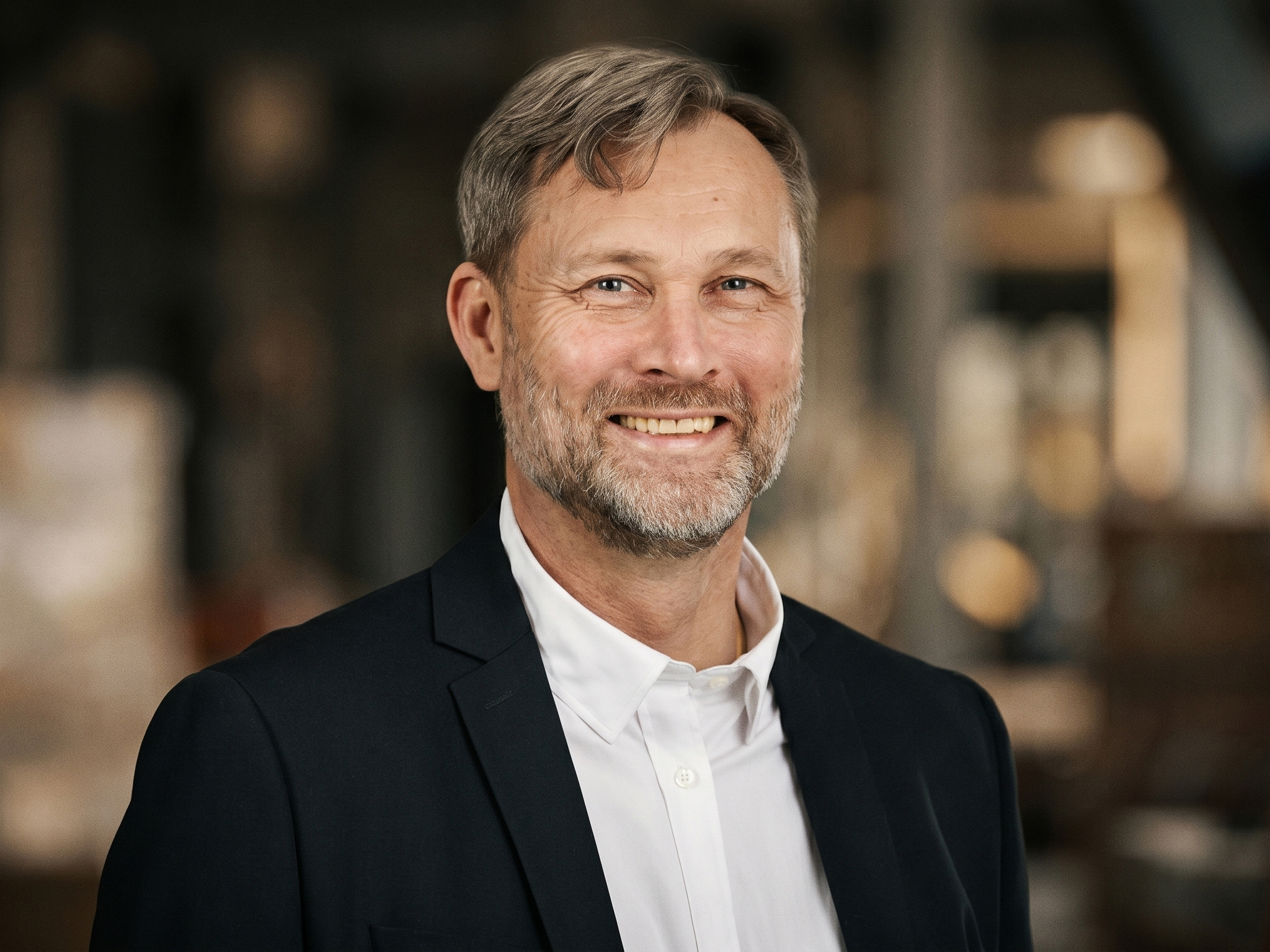
— Magnus Ljungdahl, Group CEO, DENSIQ Group
This is DENSIQ Group
We are DENSIQ Group — a European leader in sealing technology, owned by Investment AB Latour. What we do is shaped by three principles: We do. We dare. We care. They guide how we serve our customers, how we treat each other, and how we take responsibility for our impact on people, planet and society. Our purpose is simple: to bring peace of mind to our industrial partners.
The future of sealing solutions. Today.
DENSIQ Group is a wholly owned subsidiary of Investment AB Latour and a leading European producer and supplier of sealing technology. We offer products in static, dynamic and rotating sealing solutions and a broad range of connected services, including on-site machining and leak sealing during operation. DENSIQ Group works closely with the customer, allowing us to offer the highest operational reliability and minimize downtime. The DENSIQ Group family is constantly growing, and we strive for a broad workforce with a variety of vital skills that contribute to a diverse working environment.
Our purpose
Bring peace of mind to our industrial partners.
Mission
Be the preferred sealing partner in our core markets, known for our application expertise and local presence.
Values
Our values are born from our history and our diverse culture. The values will guide us in how to take decisions, how we do business and how to prioritize our job.
We do
- We act fast and as a TEAM.
- We keep deadlines and deliver on our promises.
- We seek to always develop ourselves as individuals and as a team.
We dare
- We dare to go our own way.
- We dare to challenge ourselves and move boundaries.
- We dare to be open-minded, admit mistakes, share and learn from them.
We care
- We do business with concern for people, the environment and society.
- We deliver with high ethics and morals.
- We care about the welfare of our company and our colleagues.
Year in Numbers
02Key sustainability facts and figures for DENSIQ Group 2025.
Five companies. One direction.
DENSIQ OY, DENSIQ AB, DENSIQ AS, DEPAC and VM Kompensator — five companies across five countries, sharing one mission: deliver peace of mind through sustainable sealing solutions. In 2025, that mission translated into measurable progress on climate, people, and governance.
Governance
03Governance &
Leadership.
Effective governance is essential to driving a sustainability agenda that is consistent, transparent, and anchored in leadership accountability.
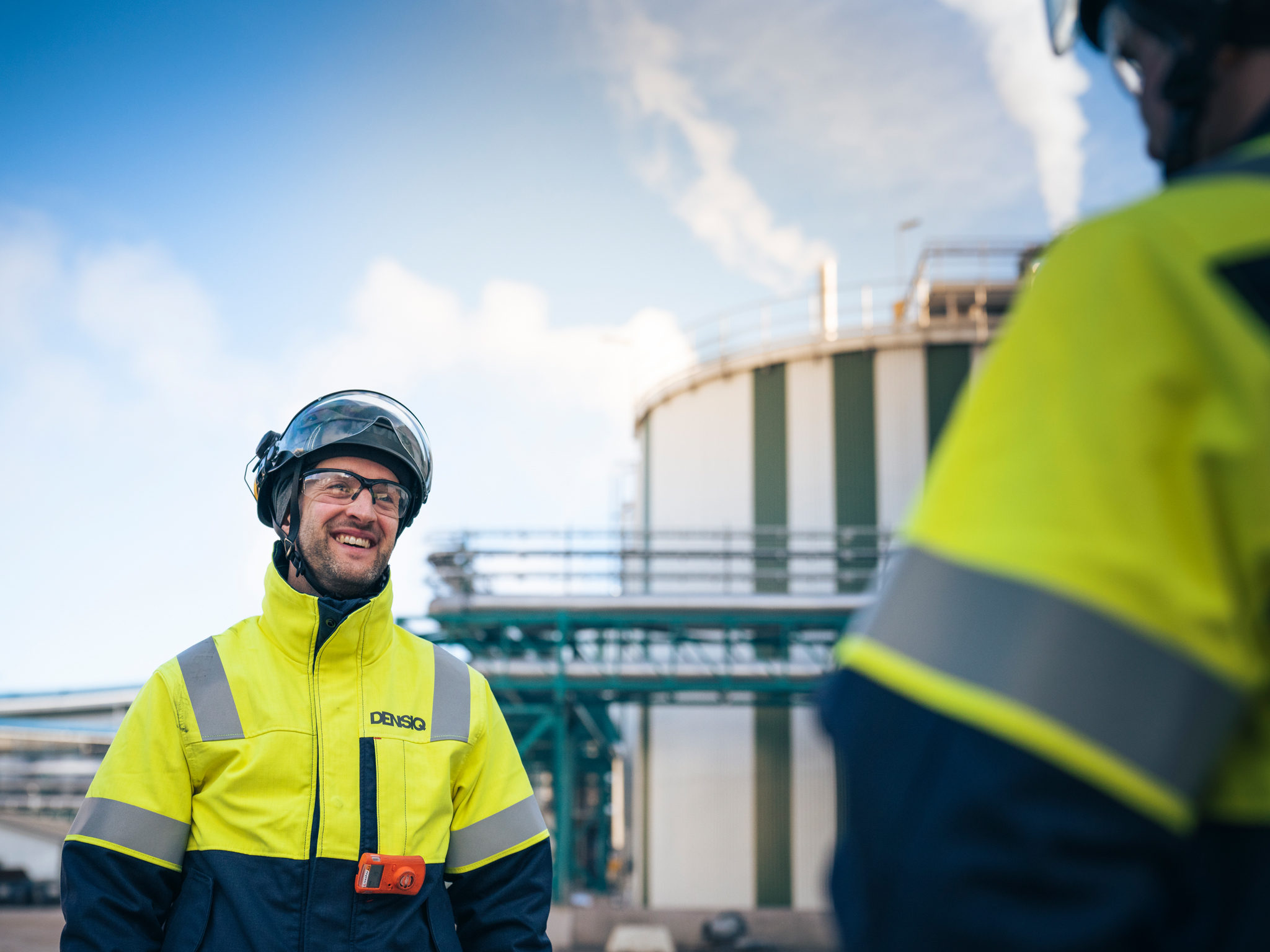
At DENSIQ Group, sustainability is embedded in our core management processes, ensuring that environmental and social performance is given the same level of attention as financial and operational results. Our governance model ensures recurring follow‑up, clear ownership and alignment across all companies in the group.
Board Meetings and Strategic Alignment
Consolidated sustainability performance is presented quarterly to the Board and to Latour Industries. This ensures transparency, strengthens strategic alignment and secures long‑term direction on climate targets, safety culture, and value‑chain sustainability.
Group Management Meetings
Sustainability is a topic in our regular Group Management meetings, ensuring that leadership teams are aligned with progress, risks and strategic priorities. These sessions create a shared understanding of challenges across markets and allow us to coordinate actions at group level.
Business Reviews
Sustainability performance is integrated into our business reviews. Leadership teams analyze results, compare outcomes across companies, and address improvement opportunities. This integration ensures sustainability KPIs are evaluated with the same seriousness as financial results.
Quarterly Sustainability Reporting (QSR)
Each company reports results, analysis and action progress on our committed sustainability targets and KPIs through a unified reporting structure. The Sustainability Director reviews these results together with local management teams to validate data, highlight trends and define actions. This quarterly rhythm keeps sustainability firmly on the operational agenda and enables proactive improvements.
Business Risk Assessment
Environmental, social and governance topics are fully incorporated into our annual business risk assessment. Climate‑related risks, safety, regulatory compliance and supply chain exposure all influence resource planning, investment decisions and strategic prioritization.
Leadership & Accountability
Leadership commitment is central to our progress. Managers across the group are expected to drive sustainability in their areas, ensure policy implementation and foster a culture of responsibility and improvement.
To reinforce this, sustainability performance is integrated into the bonus programme for management. Progress on safety, climate initiatives, energy performance and other key sustainability KPIs forms part of the evaluation for variable compensation. This ensures that our managers are motivated not only for financial outcomes, but also for delivering on our sustainability ambitions.
By embedding sustainability in governance structures, leadership processes and incentive systems, we ensure that sustainable development remains a shared responsibility — and a strategic priority — throughout the DENSIQ Group.
Our Impact
04Materiality Assessment
& Stakeholder Engagement.
Understanding our impact and shaping our priorities.
To ensure that our sustainability strategy focuses on the topics that matter most to our business and to society, DENSIQ Group conducts a structured double materiality assessment. This approach allows us to understand both our impacts on people and planet and how environmental and social developments may affect our long‑term financial performance. The assessment draws on detailed internal scoring, stakeholder dialogues, and expert judgement. It covers key ESG aspects and guides how we prioritize actions, allocate resources, and develop new initiatives.
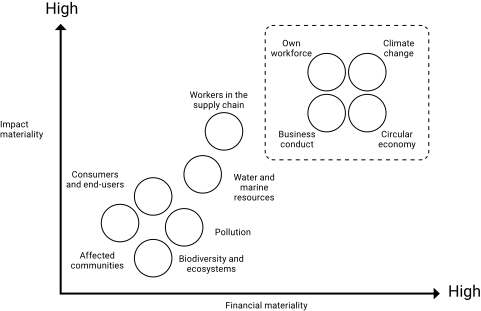
Climate Change
We know that our operations have an impact on CO₂e emissions and global warming, as any industrial group does. We are systematically working on this topic to find new opportunities to reduce our impact by analysing our carbon emissions in scope 1, 2 and 3. DENSIQ Group and its five companies are not exposed to any major environmental or climate issues known to us in our own operations. Our supplier base is mainly in Europe, with some suppliers in Asia where we estimate these risks may increase over the long run.
Own Workforce
Health, safety and competence building are critical due to the nature of our work providing service on-site. Losing key skills can affect resilience, customer relationships and long‑term capability. Building a robust organization that can effectively support our customers by always working safely, while also strengthening resilience and flexibility, is of utmost importance.
Business Conduct
Risk of violations of code of conduct may exist internally as well as among engaged suppliers or partners. Through properly integrated codes of conduct in the form of procurement requirements and mandatory training for all DENSIQ Group employees the risk is reduced. Responsible behavior in our operations and supply chain is essential.
Pollution
Our own operations pose limited pollution risk, but our products and services help customers avoid leakage and protect their processes. Pollution becomes more material upstream, where certain materials or chemicals, such as PFAS, may create risk if regulations shift.
Water & Marine Resources
Our own tap water use is limited and we are monitoring our consumption to emphasize the importance of this resource. Where possible we implement recycling systems to reuse water. Mechanical seals and related support systems can help customers significantly reduce water consumption in some applications.
Biodiversity & Ecosystems
Direct impacts from our operations are limited. Risks are mostly tied to upstream raw material extraction.
Circular Economy
The demand for circular services, such as refurbishment of mechanical seals, repair solutions and extended product life is expected to grow. Therefore, circular economy is recognized as a future high‑opportunity area, critical for competitiveness and aligned with customer sustainability strategies.
Workers in the Value Chain
Some upstream industries may pose labour‑related risks, although our primarily European supplier base mitigates much of this. Downstream, our service technicians face operational risks, which strengthens the importance of robust safety standards. We are communicating our code of conduct in our supply chain and we continue and develop our way of working with assuring decent working conditions throughout the supply chain.
Affected Communities
Given the scale and nature of our operations, we have limited direct impact on local communities.
Consumers & End‑Users
As a B2B company with industrial customers, our influence over end‑users is minimal and no significant risks were identified. 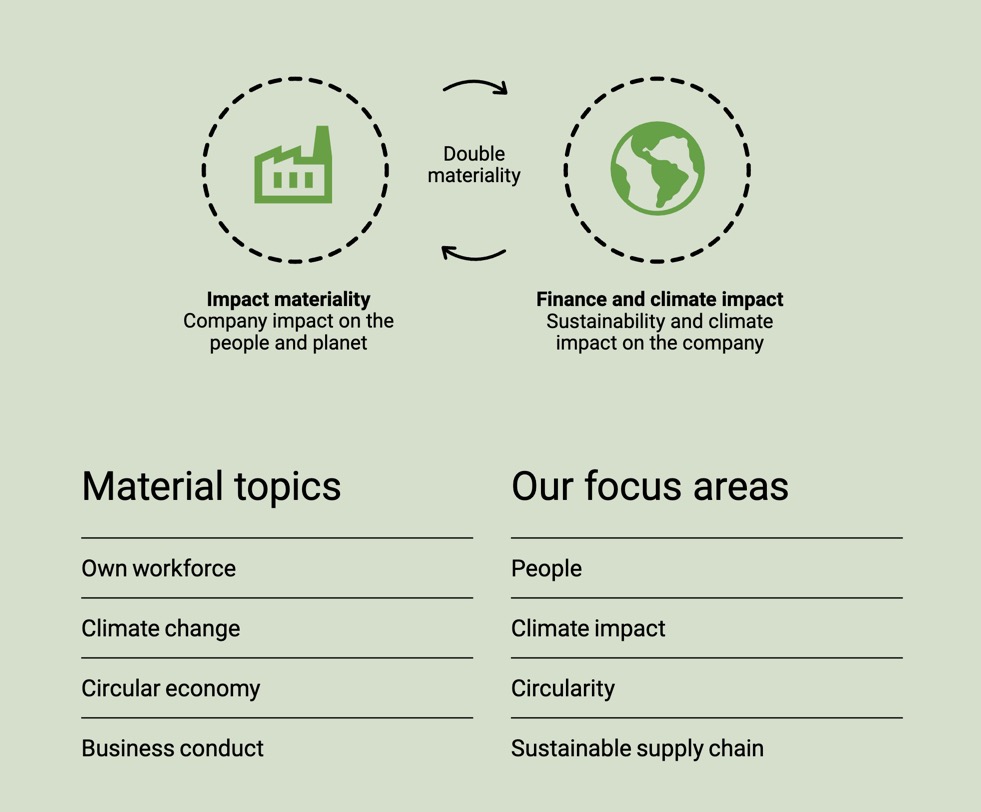
Stakeholder Engagement – How We Shape Our Understanding
Engaging with stakeholders helps refine our materiality assessment and ensures our priorities reflect the expectations of our industry, customers and society.
We collaborate closely with customers to understand their environmental challenges, such as the need to reduce leakage, improve energy efficiency, and extend equipment lifetimes. These dialogues directly support our climate, circularity and supply chain ambitions. We also see a trend, especially among larger customers, toward increased focus on how we work with both carbon reductions and decent working conditions across the supply chain.
Supplier workshops and meetings were held to discuss Scope 3 emissions, material choices, logistics optimization, and upcoming regulation (e.g., PFAS restrictions). This strengthens transparency and co‑innovation across the value chain.
Cross‑functional sessions across all companies have included workshops and discussions to align sustainability priorities.
These engagements form a critical foundation for our annual sustainability roadmap.
The leak that wasn’t
22.4 million litres of water. Used every year. Until someone asked why.
22.4 million litres of water. Used every year. Until someone asked why.
With increasing environmental requirements and growing demands to reduce water consumption, we together with our service partner Matfors Industriservice AB, have implemented a completely new sealing solution at a major customer site in Sweden/Gävle. An experience we would like to share.
The Challenge
Eight mechanical seals were lubricated and cooled using tap water, resulting in high water consumption and a risk of unplanned production shutdowns.
The Solution
Installation of the Depac SP200 Barrier Pressure System, a pressurized barrier fluid system that ensures correct pressure for mechanical seals, controlled (filtered) water quality, and minimal consumption.
The Result
- Reduction from 22.4 million litres/year to approximately 2,880 litres/year.
- Equivalent to going from almost 9 Olympic swimming pools of water every year to less than 15 bathtubs. More than 99.98% reduction in water usage
- Fewer unexpected operational stoppages
- Lower energy consumption
- Payback period: within 3–6 months
People
05Building a better
workplace. Together.
At DENSIQ, sustainability isn't just about the environment — it's about building a company that's strong, fair, and ready for the future. This past year, we've focused on our greatest strength: our people.
People First
We know that a company is only as good as its team. That’s why we’ve invested heavily in making DENSIQ a place where people want to stay and grow.
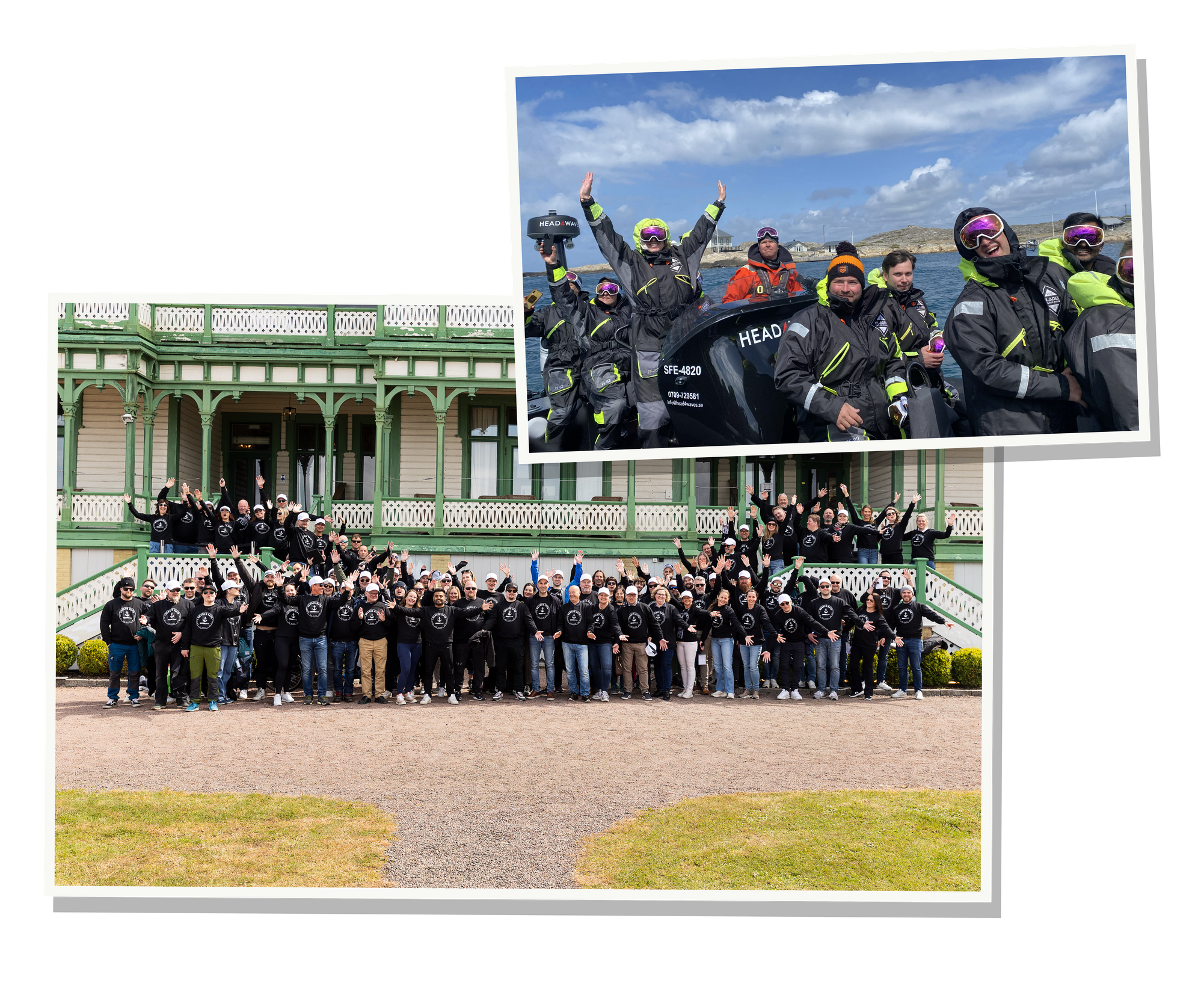
DENSIQ Days 2025
A weekend focused on collaboration and alignment
In May 2025, employees from across DENSIQ Group gathered in Sweden for DENSIQ Days 2025. The event was designed to strengthen internal teamwork, support knowledge exchange and reinforce our shared identity as One DENSIQ Group.
The programme opened with an Open House at the Gothenburg office, where colleagues and customers explored the group’s competencies through an eight-station exhibition. This helped create a clearer understanding of DENSIQ’s combined offering and how each business unit contributes to the whole.
Participants then travelled to Marstrand for two days of structured activities focused on collaboration and alignment. The weekend concluded with a Gala Dinner, recognizing achievements and contributions from across the organization.
Keep investing in Leaders
We want to keep growing our leaders and this year we did a shorter “catch-up” training for our new managers to make sure everyone has the support they need to lead with confidence.
Employee engagement and satisfaction
We re-launched our engagement tool with the theme “We made a promise.” It’s our way of saying: we’re listening, and we’re committed to making real changes based on your feedback. We added a couple of new themes: the level of trust in our organisation and sustainability.
As we grow, we’re looking for ways to work smarter and reduce our footprint.
Better Spaces
We’ve moved to a great new spot in Skien, Norway, and we have a big move planned for Denmark in late 2025. These new locations aren’t just modern — they’re more energy-efficient and provide a much better environment for our teams.
Learning Together
By bringing our sales teams together in Kolding for training, we’re not just sharing skills; we’re working more efficiently and cutting down on unnecessary travel.
Social responsibility
We have engaged in a few social activities like raising job opportunities for people who are having difficulties adjusting to the labour market. We also encourage community work and local sponsorships in our respective countries within the group.
Strengthening commercial capacity and competencies
To stay successful, we need the right people in the right places.
A Stronger Nordic Team
With a new Country Manager in Norway and six new faces joining our Nordic sales force, we’re better equipped than ever to support our customers.
Skills for the Long Run
By focusing on common training and clear leadership, we’re building a stable, professional team that can handle whatever the market throws at us.
Looking ahead towards 2026
Employee development
We want to give our managers a better set of tools that brings focus on individual growth. Stronger leaders mean a more supportive and sustainable work environment for everyone.
We’re shifting from reacting to planning. By encouraging everyone to take the lead on their own development and aspirations, we’re building a more proactive and empowered team.
We’re mapping out our skills to bridge any gaps and move toward a truly unified Nordic service organization. It’s about working smarter and sharing our expertise across borders.
In 2026 we will also kick off our new digital onboarding tool. It’s a big step toward making sure every new teammate feels welcome and set up for success from day one.
We’re moving toward more consistent processes to help our people thrive. It’s all about staying adaptable and making sure we’ve got the right mindsets to tackle future challenges together.
Zero accidents.
Our ambition.
At DENSIQ Group we are committed to ensuring the occupational health and safety of our employees, visitors or anyone that might be affected by our operations. Our goal is a safe and healthy environment with zero accidents and work-related illness.
Our targets
- Zero Lost Time Incidents.
- Zero work-related accidents.
- Transparency in number of occurrences that could have resulted in an injury.
In 2025, we had a total of 5 injuries, of which 2 were Lost Time Incidents, which falls short of our zero-accident vision. The accidents involved foot, knee, hand and head injuries. Each case has been evaluated and documented with full root-cause analysis and preventive measures. In 2025, the number of reported near misses has increased, which reflects stronger safety awareness across the group.
Key initiatives in 2025
- Continued focus on information and training in our online reporting system (DMS) to drive engagement in reporting and timelines.
- Introduced a health & safety checklist for each company to verify basic safety systems are in place.
- First aid and CPR training was conducted in all companies throughout the year.
Prepared, Wherever We Work
To strengthen our readiness in critical situations, we have ensured that both CPR competence and equipment are available at all locations across the group. Our employees are trained to act, and our sites are equipped to respond when every second counts.
Outlook
Continued focus supporting our companies to build stable processes for the regular work of assessing and reducing work-related risks.
Accidents — NO LTI
Lost Time Incidents
Near miss incidents
Supporting our
local communities.
Within the DENSIQ Group, our companies continue to support their local communities through meaningful initiatives that make a real difference for families and children in need.

During the past year, several of our subsidiaries have carried out charitable activities aligned with our values of responsibility, empathy, and local involvement.
DEPAC – Supporting Families in Need through “Licht ins Dunkel” (Austria & Liechtenstein)
As part of our community engagement, DEPAC organized a charity activity during the company Christmas event.
Employees purchased raffle tickets and DEPAC doubled the contribution.
The funds were donated to the Ö3 Christmas Miracle supporting “Licht ins Dunkel” – Emergency Aid Fund for Families in Need, one of Austria’s most renowned charitable organizations.
Through this initiative, employees actively contributed to providing immediate financial assistance to families facing difficult situations, while the company reinforced the effort through matching contributions.
DENSIQ AB and DENSIQ OY – Christmas Donation to Support Vulnerable Families (Sweden & Finland)
This year, DENSIQ AB chose to donate to Stadsmissionen in Göteborg and to Hope in Oulu, Finland—two organizations dedicated to supporting children and families living in vulnerable conditions.
Our contributions help provide warm clothing, food during the holiday season, and professional support on the path out of poverty. Christmas can be especially challenging for families in need, and with these donations we aim to offer care, dignity and hope during a difficult time.
VM Kompensator – Enabling Children’s Access to Leisure Activities (Denmark)
VM Kompensator has continued its long-standing support for Broen Vejen, a non-profit organization dedicated to helping socially vulnerable children and young people.
Broen provides financial assistance for memberships, equipment and access to sports, scouting, music and other leisure activities—ensuring that all children have the opportunity to participate on equal terms.
More information: https://broen-danmark.dk/vejen/
Group Impact
Together, these initiatives reflect our shared commitment to supporting local communities across the regions in which we operate. By empowering vulnerable families and enabling children to participate in meaningful activities, the DENSIQ Group contributes to stronger, more inclusive societies.
Climate Impact
062030 is closer than you think
Holding warming below 1.5 °C requires global emissions to fall by nearly half by 2030. Every company has a footprint — in its operations, its energy, its value chain. Ours is measured, owned, and on the way down.
Climate roadmap to 2030
We are committed to reducing our GHG emissions across our value chain and have defined absolute reduction targets for Scope 1, 2 and 3. Scope 1 and 2 are supported by a clear operational roadmap, while Scope 3 requires continued measurement, supplier dialogue and targeted reduction projects across the value chain.
Our targets
- Reduce our CO₂e emissions (Scope 1 & 2) by 40% until 2030 relative to base year 2022.
- Reduce our CO₂e emissions (Scope 3) by 20% until 2030 relative to base year 2022.
Key initiatives in 2025
- Focus on developing short- and long-term reduction plans for Scope 3 emissions.
- Increase the use of renewable fuels and continue the transition to electric vehicles where operationally feasible.
- Continue energy-saving actions that reduce purchased energy and Scope 2 emissions.
Outlook
Scope 1 and 2 are progressing strongly against the 2030 target, while Scope 3 remains the largest and most complex area to reduce. The coming years will focus on scaling structured, high-impact measures across the value chain, especially within Purchased Goods & Services and Upstream & Downstream Transportation.
Together, these actions form the foundation for meeting our long-term climate ambitions while ensuring sustainable growth for the group.
Our long-term
carbon reduction plan.
We are committed to reducing our GHG emissions across our value chain and have defined absolute reduction targets for Scope 1, 2 and 3.
Our climate work is structured around three connected layers: reducing direct emissions from our own operations, lowering indirect emissions from purchased energy and accelerating Scope 3 reductions across the value chain.
Scope 1 and 2 are already supported by clear operational actions and a measurable reduction roadmap. Scope 3 is broader and more complex, requiring continued data quality improvements, supplier dialogue and targeted reduction projects.
During 2024, we completed our first qualified Scope 3 data collection, and this work continued in 2025. The target remains clear: a 20% reduction in Scope 3 emissions by 2030, relative to the 2022 baseline.
Looking ahead
- Strengthen supplier dialogue and require transparent climate data and reduction plans across the supply chain.
- Prioritize projects with scalable emission-reduction potential.
- Continue quarterly reviews to secure progress and engagement from all sites and business leaders.
Reducing our scope 1 and 2 emissions
During 2025, we reduced our Scope 1 and 2 emissions by 37% compared to our 2022 baseline. This is well aligned with our reduction target of reaching 40% by 2030.
Scope 1 reduction per company (2022→2025)
| Company | 2022 | 2023 | 2024 | 2025 | Diff 25 vs 22 |
|---|---|---|---|---|---|
| DENSIQ AB | 71 | 67 | 55 | 49 | -31% |
| DENSIQ OY | 38 | 30 | 33 | 17 | -55% |
| DENSIQ AS | 11 | 9 | 9 | 8 | -27% |
| VM Kompensator | 43 | 40 | 43 | 36 | -16% |
| DEPAC | 74 | 66 | 43 | 34 | -54% |
| Total | 237 | 212 | 183 | 144 | -39% |
| Company | 2022 | 2023 | 2024 | 2025 | Diff 25 vs 22 |
|---|---|---|---|---|---|
| DENSIQ AB | 0 | 0 | 0 | 0 | 0% |
| DENSIQ OY | 0 | 0 | 0 | 0 | 0% |
| DENSIQ AS | 0 | 0 | 0 | 0 | 0% |
| VM Kompensator | 32 | 29 | 30 | 31 | -3% |
| DEPAC | 53 | 53 | 44 | 33 | -38% |
| Total | 85 | 82 | 74 | 64 | -25% |
| Year | Fossil sources | Nuclear sources | Renewable fuel sources | Self-generated non-fuel renewable energy | Purchased/acquired heat, steam and cooling from renewable sources |
|---|---|---|---|---|---|
| 2022 | 773 | 0 | 29 | 0 | 286 |
| 2023 | 680 | 0 | 38 | 0 | 306 |
| 2024 | 634 | 0 | 12 | 0 | 282 |
| 2025 | 646 | 0 | 48 | 0 | 215 |
Key initiatives in 2025
- Increased use of renewable fuels (HVO) for service vehicles and continued transfer to electric vehicles
- Energy savings resulted in reduced scope 2 emissions
Outlook
For Scope 1 and 2, we have a solid understanding of our impact and the actions needed to reduce emissions. With our current plans, we expect to fulfil the 40% reduction target earlier than planned.
Continued focus on renewable fuels for service vehicles and the transition to electric vehicles will bring us beyond the currently defined targets. At the same time, renewable electricity, lower heating demand and practical energy-efficiency routines remain important to keep Scope 2 emissions down.
Scope 3:
Mapping the path.
Our Scope 3 emissions represent the largest share of our total carbon footprint. In 2025 we consolidated all Scope 3 initiatives into a unified Group carbon-reduction portfolio, linking each project to baselines and 2030 targets.
Key initiatives in 2025
- Established a structured Scope 3 carbon-reduction programme covering multiple categories across the value chain.
- Each quarter all companies report on progress on projects and initiatives focusing on carbon reduction.
- Supplier engagement: communicated our ambitions and targets, and started dialogue with key suppliers on their plans for 2030.
- Continued reduction in upstream air freight — Category 4 emissions down from 91t to 30t CO₂e in Norwegian operations.
This chart shows how total Scope 3 emissions are distributed between DENSIQ Group companies each year. The percentages represent each company’s share of the group’s total Scope 3 emissions for that year. The chart helps identify where Scope 3 reduction efforts can have the greatest impact.
Looking ahead
The key priority is to identify and implement additional Scope 3 projects, particularly within Purchased Goods & Services and Upstream & Downstream Transportation — the categories accounting for the majority of our emissions. Supplier diversification closer to core markets is being implemented to reduce transport distances and emissions intensity.
Leading the Way
at DENSIQ OY.
Our Finnish operations have demonstrated outstanding progress in reducing their climate impact. Scope 1 and 2 emissions have been reduced by 55% compared to the 2022 baseline — the company has already exceeded its 2030 target, five years ahead of plan.
What drove the result
This result reflects focused and effective actions in own operations and shows what is possible when clear targets are combined with concrete measures. The strong performance of DENSIQ OY serves as an important benchmark within the group.
The transition to HVO renewable fuel — which accounted for 30% of total fuel use in 2025 — combined with ongoing electrification of the company car fleet, has been central to this progress.
Phasing in HVO.
In our Finnish and Swedish operations, the transition to HVO (Hydrotreated Vegetable Oil) has become an important lever for reducing Scope 1 emissions. Compared with conventional diesel, HVO enables a substantial reduction in greenhouse-gas emissions.
Why HVO
Hydrotreated Vegetable Oil is a diesel-like fuel that can be used in existing vehicles without modification. Compared to conventional diesel, it enables a substantial reduction in greenhouse gas emissions — making it a practical and immediate climate action.
The broader fleet transition
Since 2023, our company car policy allows only fully electric vehicles. Service vehicles follow as range and flexibility improve. HVO bridges the gap — enabling meaningful Scope 1 reductions right now, while the long-term electrification strategy matures.
A smarter
location.
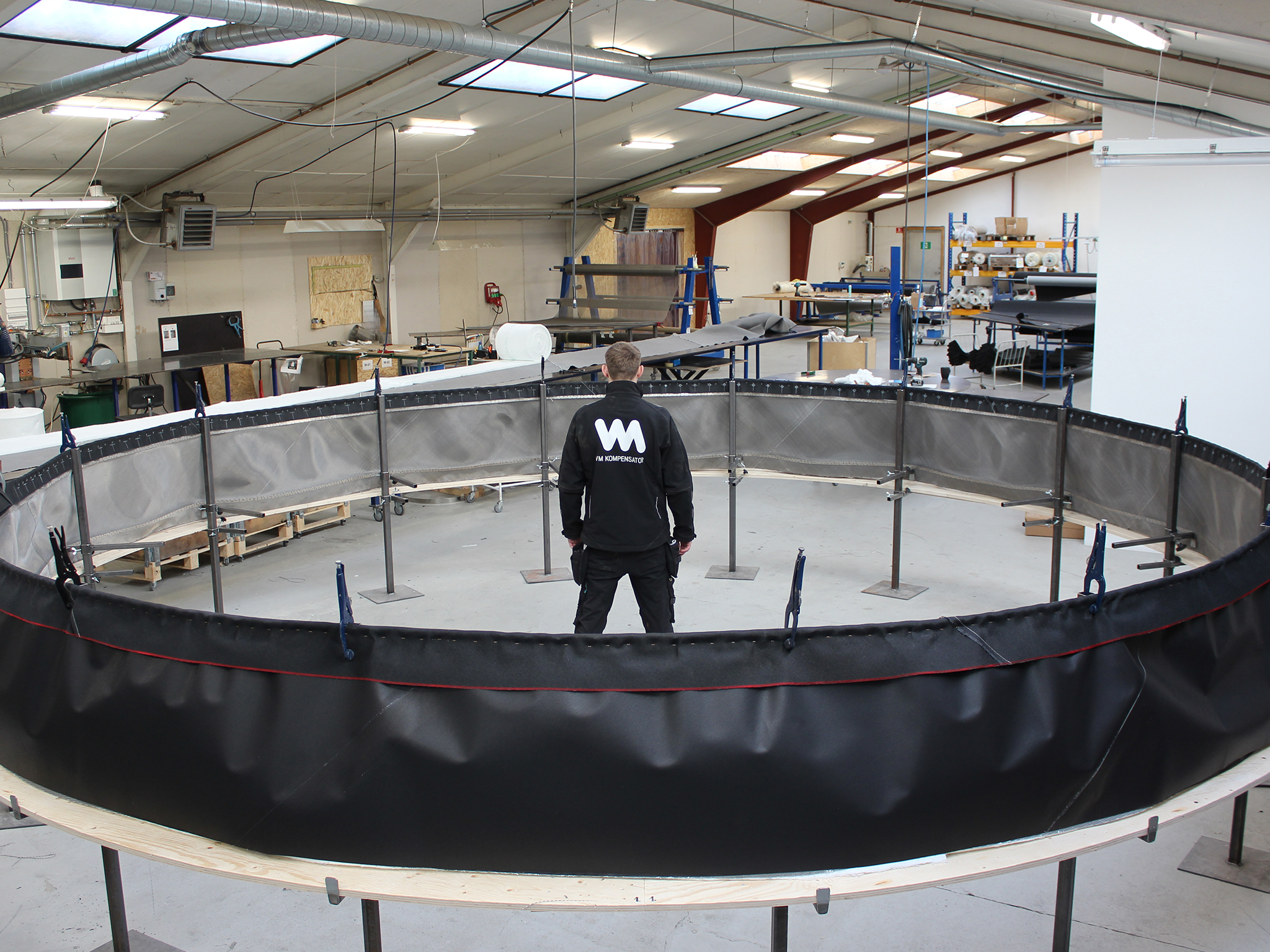
At the end of 2025, VM Kompensator moved to a new factory in Vejen. The new site does more than provide a better workspace — it actively reduces emissions.
What changed
The new site at Vinkelvej 3, 6600 Vejen is heated with district heating, replacing natural gas entirely. As a result, Scope 2 emissions will be reduced despite continued business growth.
The location is also closer to where employees live, reducing commuting distances and Scope 3 emissions. VM Kompensator also joined CDP's SME disclosure program in 2025, receiving a Climate Score of B.
Reduced Air Freight
in Norway.
During 2025, DENSIQ AS launched a targeted transition action to reduce air freight in the upstream supply chain, addressing one of the most carbon-intensive transport modes within Scope 3.
The transition
A specific Scope 3 target was established: reduce air freight volumes from Asia by 50% by 2030 compared to 2024 levels. Key enablers include increased local production capability, improved stock planning, and a shift from air to sea freight where feasible.
Early results confirm the direction. During 2025, emergency customer demand was fulfilled without resorting to air transport — a milestone that demonstrates operational readiness without emissions cost.
Circularity
07-33% energy
intensity.
We continue as a group to get more effective when it comes to total energy consumption. In 2025, energy intensity reached 4.73 MWh per million SEK of revenue — a 33% improvement since 2022.
What drove the results
All five companies operated on 100% renewable electricity. DENSIQ AB and DENSIQ OY made notable reductions through heating optimization and operational efficiencies. DEPAC delivered some of the most impactful energy-saving measures, including reduced CNC machine pressure, improved lighting and ventilation routines, and the highly effective shift to process-heat-based building heating — eliminating up to 80% of purchased heat demand in Quality Control and production areas.
Waste intensity
Waste intensity improved by 22% since 2022, from 0.32 to 0.25 tonnes per million SEK of revenue. Employees across all companies have been trained on proper waste separation and the efficient use of raw materials to minimize waste generation.
Our targets
- 5% yearly improvement in energy intensity (scope 1 & 2 vs. revenue).
- 100% recyclable packaging by 2030.
- 5% yearly reduction in total waste index.
Outlook
- Continue the regular follow-up and reporting to keep up the momentum.
- Continue encouraging our organization to seek opportunities to reduce energy consumption.
Quiet Efficiency
in Shipping.
In 2025, DEPAC continued to demonstrate how practical, employee-driven improvements strengthen both operational excellence and workplace well-being. One highlighted initiative came from the Shipping department.
The problem
High noise levels from continuously running compressed-air guns interfered with phone calls, customer coordination, and internal communication — a health risk and a daily frustration across the shipping department.
The solution
Individual pressure regulators were installed on each air gun, reducing operating pressure from 6-7 bar to 2.5-3.5 bar. When higher pressure was briefly needed, the regulator allowed temporary adjustments without compromising safety or performance.
The results
- A noticeably quieter workspace
- Improved concentration and communication
- Reduced risk of hearing-related health complaints
- Meaningful reduction in compressed-air energy consumption
This story reflects what DEPAC — and the wider DENSIQ Group — stands for: empowering employees to identify meaningful improvements that support People, Planet, and Profit.
Sustainable Supply Chain
08Business ethics
& transparency.
DENSIQ Group is a responsible owner of five companies. We share a common vision, a strong entrepreneurial spirit, and fundamental principles of respect for the individual and local community.
Code of Conduct
DENSIQ Group's Code of Conduct sets the minimum requirements governing relationships with employees, business partners and other stakeholders. All management team members and employees with purchasing or sales positions must carry out online training every two years — the most recent training was held during 2025. Suppliers, distributors, consultants and other business partners must apply the principles of our Code of Conduct.
Whistleblowing
Together with owner Latour, DENSIQ Group uses WhistleB — a centralised system for anonymous whistleblowing through which employees can report suspected irregularities. There were no instances of whistleblowing reported during 2025.
ISO 14001 Certification
Since 2024, all five companies have successfully implemented and achieved ISO 14001 certification by an accredited third-party certification body. ISO 14001 provides a strong foundation for focused work on identifying environmental aspects and continuously improving environmental performance.
EcoVadis
DENSIQ AB and DEPAC use EcoVadis to demonstrate sustainability performance to key customers. DENSIQ AB holds EcoVadis Bronze status. DEPAC increased its score to Silver status in 2025. The assessment evaluates policies, actions and results across Environment, Labour & Human Rights, Ethics, and Sustainable Procurement.
CDP — Carbon Disclosure Project
VM Kompensator joined CDP's first dedicated SME questionnaire, marking a commitment to environmental transparency. For 2025, VM Kompensator received CDP SME Climate Score B. This disclosure is used by stakeholders across finance, procurement, investment and policy to enable the green transition.
Continue the conversation
Let’s talk sustainable sealing solutions.
Do you have questions about our sustainability work, our solutions, or how DENSIQ can support your operations? Send us a message or contact your local DENSIQ team directly.